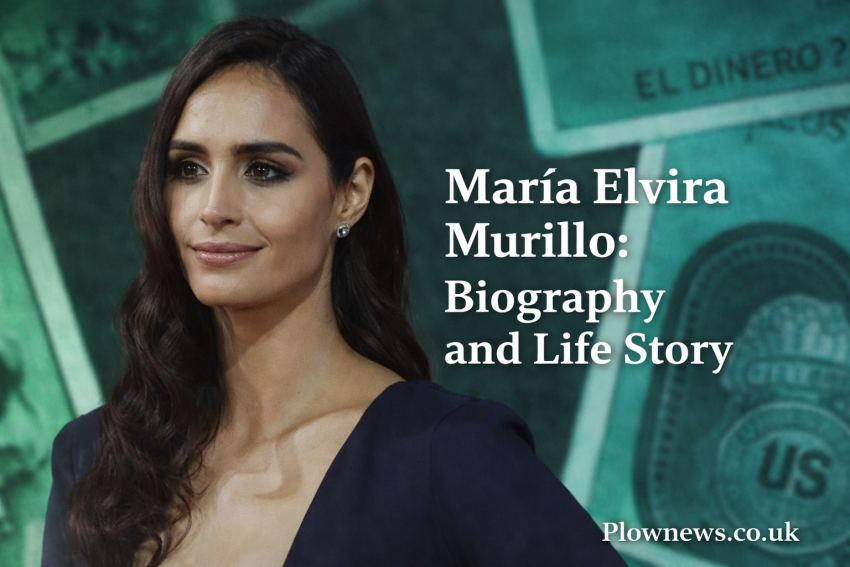
The story of María Elvira Murillo is one of quiet presence and lasting intrigue. Unlike many figures associated with Mexico’s most turbulent criminal era, she never gave interviews, never sought attention, and never attempted to shape her own narrative. Yet her name continues to surface in journalistic investigations, court documents, and popular culture. Her relevance does not come from personal notoriety but from proximity to power. As the second wife of Miguel Ángel Félix Gallardo, often referred to as “El Jefe de Jefes,” María Elvira Murillo became part of a historical moment that reshaped organized crime in Mexico and influenced global drug trafficking for decades.
This biography explores what is known about María Elvira Murillo, separating documented facts from speculation, and placing her life within the broader social and political environment of late twentieth-century Mexico.
Early Life and Personal Background
Very little verified information exists about María Elvira Murillo’s early life. Public records and journalistic sources have not documented her birthplace, family origins, or education in detail. This absence is not unusual for individuals who were not public figures in their own right. What can be inferred is that she moved comfortably within upper social circles in Sinaloa and Guadalajara, suggesting a background that allowed her access to influential networks long before her marriage to Félix Gallardo.
Unlike many women later associated with drug traffickers, Murillo was not portrayed as a celebrity figure or public personality. Instead, she remained firmly private, which has contributed to the enduring mystery surrounding her biography.
Marriage to Miguel Ángel Félix Gallardo
María Elvira Murillo is widely described by Mexican media as the second wife of Miguel Ángel Félix Gallardo, one of the most powerful figures in the early consolidation of organized drug trafficking in Mexico. Their marriage occurred during a period when Félix Gallardo was expanding his influence beyond regional smuggling operations and into a structured, international criminal network.
Journalistic investigations have noted that Murillo was socially well regarded and recognized within elite circles. This social standing reportedly helped Félix Gallardo integrate into political and business environments that extended beyond the traditional underworld. One frequently cited detail is that Leopoldo Sánchez Celis, then governor of Sinaloa, served as a padrino at their wedding. While this fact alone does not imply wrongdoing, it illustrates the proximity between political authority and private life during that era.
The marriage symbolized more than a personal union. It represented the blending of power, legitimacy, and influence at a time when criminal organizations relied heavily on social credibility to operate discreetly.
Life Within Mexico’s Narco Elite
During the late 1970s and 1980s, Mexico experienced profound changes in the structure of organized crime. Drug trafficking shifted from fragmented operations to coordinated networks capable of moving large quantities of narcotics across borders. Within this environment, the spouses of key figures often played indirect but significant roles by maintaining appearances of normalcy and respectability.
María Elvira Murillo was reportedly involved in legitimate business activities, including ownership of a furniture store in Guadalajara. Such enterprises were common among individuals connected to powerful figures, serving both as income sources and as symbols of legal success. After Félix Gallardo’s arrest in 1989, several properties and businesses linked to him and his associates were seized by authorities. Court proceedings years later resulted in the return of numerous assets, including the furniture business attributed to Murillo.
These events placed her name into legal records but did not establish direct criminal responsibility. Instead, they highlighted how closely personal lives and financial structures were intertwined during that period.
Arrest of Félix Gallardo and Legal Aftermath
The arrest of Miguel Ángel Félix Gallardo in April 1989 marked a turning point in Mexico’s fight against organized crime. For those closest to him, including María Elvira Murillo, it also marked the beginning of long legal and social uncertainty. Properties were frozen, businesses investigated, and relationships scrutinized by authorities and media alike.
Over the following years, court rulings questioned the legality of some asset seizures. In 2003, a Mexican tribunal ordered the return of a significant number of properties, citing procedural irregularities. Among the assets mentioned in coverage was Murillo’s furniture business, reinforcing her association with Félix Gallardo’s financial world without placing her at its center.
After this period, María Elvira Murillo effectively disappeared from public reporting. No confirmed interviews, statements, or public appearances have been documented in subsequent years.
Portrayal in Popular Culture
Interest in María Elvira Murillo surged again with the release of the Netflix series Narcos: México. The series dramatized the rise of Mexico’s early drug traffickers and introduced Murillo as a character portrayed by actress Fernanda Urrejola. While the show presented her as an intelligent and emotionally complex figure, it was clear that dramatic storytelling filled gaps where historical records remain silent.
As with many biographical dramas, the portrayal blended fact with interpretation. For many viewers, this fictionalized version became their primary reference point, further blurring the line between the real woman and her on-screen counterpart. This phenomenon illustrates how modern media can redefine public memory, even when dealing with individuals who deliberately avoided the spotlight.
Public Perception and Historical Significance
María Elvira Murillo occupies a unique space in the history of Mexico’s narco era. She was neither a criminal leader nor a public advocate, yet her life intersected with forces that reshaped national and international policy. Her biography highlights how organized crime relied not only on violence and logistics but also on social legitimacy and private alliances.
Her story also reflects the gendered dimensions of historical memory. Men like Félix Gallardo are documented extensively, while women connected to them are often reduced to archetypes or left unexplored. Murillo’s limited public footprint challenges historians and journalists to confront the ethical boundaries of biographical storytelling.
Conclusion
María Elvira Murillo remains an enigmatic figure, defined more by context than by personal testimony. Her life, as far as public records reveal, was marked by discretion, social status, and proximity to one of the most influential criminal figures in modern Mexican history. Rather than offering sensational revelations, her biography provides insight into the quieter structures that supported power during a transformative era.
In the end, María Elvira Murillo’s story is not only about who she was, but about how history remembers those who stood just outside the spotlight, shaping events through presence rather than proclamation.